
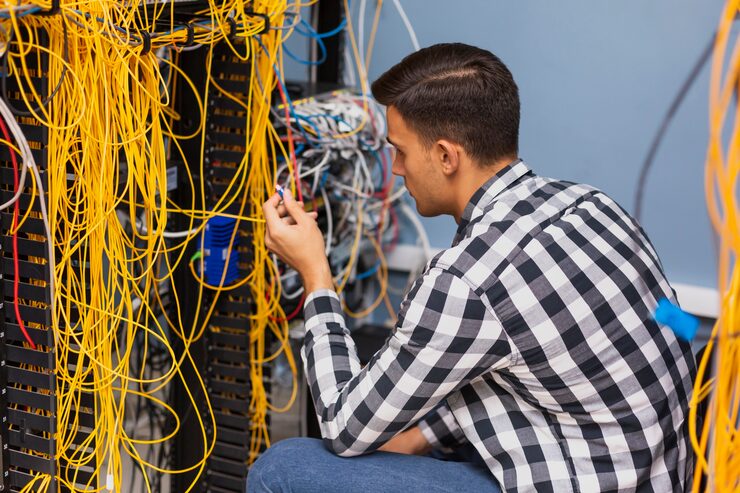


In today’s connected world, network infrastructure has become one of the most important assets for any organization. From communication and collaboration to security and daily operations, nearly every business function depends on reliable connectivity.
A strong network infrastructure begins with proper planning and design. Organizations must ensure that their networks can support current requirements while remaining flexible enough to accommodate future growth. This includes structured cabling systems, fiber infrastructure, enterprise-grade switches, and secure wireless connectivity.
Reliable networking directly impacts productivity. Employees depend on stable internet access, cloud applications, communication platforms, and connected devices to perform their responsibilities efficiently. Network interruptions can lead to downtime, lost revenue, and decreased customer satisfaction.
Wireless connectivity has also become increasingly important. Modern workplaces require seamless Wi-Fi coverage that supports laptops, mobile devices, surveillance systems, access control platforms, and smart technologies. Poor wireless performance can significantly affect operational efficiency and user experience.
Cybersecurity is another major consideration. As organizations become more digitally connected, the number of potential vulnerabilities also increases. Secure network architecture, segmentation, monitoring, and access management help reduce risks and protect sensitive information from unauthorized access.
Fiber infrastructure continues to play a crucial role in modern network environments. Fiber optic solutions provide higher bandwidth, faster data transmission speeds, and greater reliability compared to traditional cabling methods. This makes fiber an ideal solution for businesses with growing technology demands.
Scalability should also be considered during infrastructure planning. As organizations expand, they often introduce new devices, applications, and locations that require additional network capacity. A properly designed infrastructure allows businesses to grow without requiring complete system replacements.
Network reliability also directly affects security systems. Video surveillance, access control systems, intrusion detection, and monitoring services all rely on stable connectivity to operate effectively. A network outage can significantly impact an organization’s ability to monitor and protect its facilities.
Routine maintenance and proactive monitoring help ensure optimal network performance. Identifying potential issues early reduces downtime and extends the lifespan of infrastructure investments. Regular assessments, updates, and performance evaluations contribute to long-term operational stability.
Investing in reliable network infrastructure is not merely a technical decision—it is a strategic investment in business continuity, efficiency, and future growth. Organizations that prioritize modern networking solutions position themselves for greater productivity, improved security, and enhanced customer experiences.
As technology continues to evolve, businesses that maintain strong and scalable network foundations will remain better prepared to adapt to changing demands and emerging opportunities.